
Separate confirmed payment facts from casino claims
The available evidence covers Australia’s legal limits and the lack of verified details on CashToCode availability, deposits, withdrawals and bonuses.

Table of Contents
Table of Contents
- Australian Online Gambling Law and the Limits of the Available Evidence
- CashToCode and Australian Online Pokies: What Is Confirmed
- CashToCode Deposit Amounts and Payment Availability
- Assessing Casino Payment Claims Without a Verified CashToCode List
- CashToCode, Casino Payouts and Withdrawal Timing
- What the 2026 CashToCode Casino Query Can—and Cannot—Establish
- Casino Games and Payment Compatibility
- CashToCode Withdrawals: No Verified Processing Details
- How Australian Payment Habits Frame the CashToCode Question
- CashToCode Casino Bonuses and Promotion Evidence
Australian Online Gambling Law and the Limits of the Available Evidence
Australia’s legal framework draws a clear distinction between the conduct of online gambling operators and that of individuals. Under the Interactive Gambling Act 2001, operators must not provide real-money online casino games to people in Australia. The prohibition covers casino-style games such as poker, blackjack, roulette and pokies; it applies to services offered to people physically located in the country.
The law does not explicitly make it a criminal offence for an individual to use an offshore gambling site. That distinction does not make offshore casino services lawful to provide in Australia, nor does it amount to regulatory approval of those services. The Australian Communications and Media Authority (ACMA) oversees enforcement of the Act, and offshore services are subject to blocking and enforcement measures. Australian consumer law does not protect people who use offshore casinos, so the absence of player criminal liability should not be confused with consumer safeguards.
This context matters when considering whether a casino operating beyond Australia’s legal framework accepts CashToCode. Payment acceptance and legal status are separate questions: a payment method, if offered by an operator, would not make the underlying casino service lawful to provide to Australians. Conversely, the legal prohibition does not establish whether any particular operator supports CashToCode. No specific Australian casino can therefore be identified on legal grounds as a CashToCode option.
Top operators
Choosing a casino that accepts CashToCode in Australia calls for checking the details that matter to your visit, such as licensing, deposit minimums and payout information where available. Use these short verdicts as a reference when considering your options.
-
Kingmaker
- Payout speed
- crypto ~90 minutes, fiat 1-5 days
- Min. deposit
- A$30
Kingmaker lists a minimum deposit of A$30. Its stated payout speeds are around 90 minutes for crypto and 1–5 days for fiat.
-
Golden Pokies
- License
- Curacao
Golden Pokies is listed with a Curacao licence.
-
Uptown Pokies
- License
- Curacao (operating since 2017)
- Min. deposit
- A$20
Uptown Pokies is listed with a Curacao licence and has been operating since 2017. Its minimum deposit is A$20.
-
SkyCrown
- License
- Tobique Gaming Commission
- Payout speed
- crypto ~10-15 minutes, fiat 1-5 days
- Min. deposit
- A$30
SkyCrown is listed with a Tobique Gaming Commission licence. Its stated payout speeds are around 10–15 minutes for crypto and 1–5 days for fiat, with a minimum deposit of A$30.
-
Rollero Casino
- License
- Curacao Gaming Control Board OGL/2023/176/0095 (Hollycorn N.V.)
Rollero Casino is listed under Curacao Gaming Control Board licence OGL/2023/176/0095, held by Hollycorn N.V.
-
LuckyVibe
- License
- Curacao Gaming Control Board OGL/2023/176/0095 (Hollycorn N.V.)
LuckyVibe is listed under Curacao Gaming Control Board licence OGL/2023/176/0095, held by Hollycorn N.V.
-
Lucky Dreams
- License
- Curacao
- Min. deposit
- A$20 (POLi)
Lucky Dreams is listed with a Curacao licence. The stated minimum deposit is A$20 for POLi.
-
Thor Casino
- License
- Curacao – Antillephone N.V. (Versus Odds B.V.)
- Min. deposit
- EUR 20
Thor Casino is listed with a Curacao licence from Antillephone N.V. (Versus Odds B.V.). Its minimum deposit is EUR 20.
-
MrPacho
- Payout speed
- crypto 30-120 minutes, fiat 24-72 hours
- Min. deposit
- A$30
MrPacho lists a minimum deposit of A$30. Its stated payout speeds are 30–120 minutes for crypto and 24–72 hours for fiat.
-
JustCasino
- License
- Curacao Gaming Control Board
JustCasino is listed with a Curacao Gaming Control Board licence.
The phrase “Australian casino that accepts CashToCode” can describe a payment preference, but it should not imply that Australia authorises real-money online casinos. The relevant law concerns the provision of the gambling service, not merely the method used to fund an account. Claims about a particular operator’s payment arrangements would require operator-specific confirmation, while the national legal position remains the same regardless of the payment brand involved.
Accordingly, the Australian regulatory framework sets a boundary for operators, not a verified directory of payment methods. It also leaves no basis for treating offshore access as a protected consumer transaction.
CashToCode and Australian Online Pokies: What Is Confirmed
CashToCode is named in searches for Australian online pokies, but that interest does not establish that a casino accepts the payment method. It would therefore be inaccurate to present a list of Australian casinos accepting CashToCode, or to describe any particular site as the best choice for this payment method.
The distinction matters because a payment name appearing in a casino-related discussion is not the same as an operator’s confirmed cashier option. Acceptance is a specific claim about a service and its payment arrangements. Without confirmation tied to an operator, a general statement that CashToCode works at Australian online casinos cannot be treated as established. Nor does the word “Australian” in a site description establish that the service is legally available to people located in Australia.


For online casino games, the legal setting is especially important. The Interactive Gambling Act 2001 prohibits operators from providing real-money online casino games to people physically in Australia. This includes games such as poker, blackjack, roulette and pokies. The prohibition concerns the operator’s provision of the service; it does not explicitly make an individual player’s use of an offshore site a criminal offence. The Australian Communications and Media Authority is responsible for enforcing the Act. These distinctions do not turn an offshore payment claim into evidence that a casino is authorised to serve Australian residents.
Accordingly, claims that a particular Australian online casino, mobile casino or pokies site accepts CashToCode should be treated as unsubstantiated unless they can be tied to clear, current operator information. A payment logo, an old review, or a broad claim about payment availability would not by itself show that the option is currently offered to Australian customers. Payment arrangements can be specific to a service and may change, so statements about acceptance require evidence that identifies both the operator and the relevant payment method.
The same standard applies to descriptions such as “new” or “best.” Those labels do not establish CashToCode compatibility, and there is no confirmed basis for ranking pokies sites by that criterion. Naming operators without reliable confirmation would imply a connection between them and CashToCode that has not been established. It would also risk presenting prohibited online casino services as options for Australian residents.
The careful answer is therefore narrow: CashToCode acceptance at an Australian online pokies site is not confirmed. That is not proof that no operator anywhere has ever displayed CashToCode, and it does not establish anything about the payment method’s availability outside this market. It means that no specific Australian casino can responsibly be described here as accepting it. Claims about a mobile version or a site’s general payment capabilities require the same operator-specific support; neither a mobile format nor a casino label supplies that support on its own.
This also limits what can be inferred from the phrase “accepts CashToCode.” It does not, by itself, specify whether the claim concerns a particular country, a particular service, or an active cashier option. Without those details, the statement is too broad to support a dependable identification of an Australian pokies site. The legal status of the service remains separate from the payment question: an offshore site’s possible accessibility or payment claims do not make the provision of real-money online casino games to people in Australia lawful.


In practical terms, no named Australian online pokies service can be presented as a verified CashToCode option. The distinction between a search for a payment method and a substantiated operator-specific claim is essential: interest in CashToCode does not establish acceptance, and acceptance alone would not resolve the legal restrictions on real-money online casino services in Australia.
CashToCode Deposit Amounts and Payment Availability
A low-deposit search does not establish that a particular payment method is accepted or that a minimum deposit is available. A requested amount and a method named in the same phrase are not proof that a casino cashier supports that combination.
This distinction matters because deposit conditions are not interchangeable. A method may be discussed generally without being available at a particular service, and a payment option appearing in a description does not by itself establish which amounts it permits. Without confirmed terms for an operator, a CashToCode deposit cannot be described as available at a low value or at any other value.
What a deposit amount would need to establish
A minimum deposit is a condition attached to a specific payment route and operator, not a general property of a payment brand. The same applies to a maximum, transaction fee, processing time, or currency. Those details cannot be carried from one cashier to another by assumption.
The wording of a deposit offer would also need to distinguish between the amount accepted for one transaction and any separate account or payment restrictions. A displayed threshold, if one were encountered, would need to be tied to the relevant method and service. In the absence of that connection, it cannot support a reliable claim about CashToCode availability.
Those are separate conditions, not automatic consequences of naming a payment method.
Availability is not the same as amount
A deposit question has at least two distinct parts: whether the method is accepted and what transaction conditions apply if it is. The amount question cannot be answered before availability is established. Conversely, a general claim that a payment option exists somewhere would not prove that it is enabled for Australian users or that it supports the amount under consideration.
This is especially important when comparing low-value deposits. A method could be subject to one set of terms at one operator and different terms elsewhere; a figure reported in one context cannot be treated as a market-wide standard. Accordingly, no low-deposit threshold or preferred site can be identified.
Payment availability can also vary over time. A cashier is the relevant place for an operator’s current payment choices and conditions, but a general reference to a cashier does not establish that CashToCode is listed there. Neither a payment-method name nor a deposit amount in promotional or descriptive wording independently confirms that the transaction can be completed.
Australian payment context
Australian consumers are comfortable moving among cards, mobile wallets, and services connected with bank accounts, including PayPal. That broad flexibility describes payment habits, not casino acceptance of any particular method. It cannot be used to infer CashToCode support, deposit values, or transaction terms.

The distinction also prevents comparisons from becoming misleading. Familiarity with several payment categories does not mean that one service accepts every method, or that a method’s conditions carry across services. A claim about a low-value deposit would therefore need operator-specific substantiation before it could be treated as reliable.
Australian consumer law does not protect people who use offshore casinos. This is a material limitation when considering payment claims connected with those services; a stated deposit condition should not be mistaken for consumer protection or assurance that a transaction is available.
The soundest description is therefore narrow: a particular CashToCode deposit amount, including a low-value one, is not established.
Assessing Casino Payment Claims Without a Verified CashToCode List
A claim that a casino accepts CashToCode is meaningful only when it is tied to a specific operator and a clearly defined transaction. General descriptions of a payment method, or a page grouping casinos under a payment label, do not by themselves establish that the method is available for a particular account or transaction.
This distinction matters when assessing claims framed as recommendations for the “best” CashToCode casino site. A ranking requires more than a payment-method label: it would need reliable, comparable information about which services accept the method and the conditions attached to that acceptance. Without those details, a ranked list would imply a level of confirmation that is not present. Naming operators or describing them as CashToCode options would therefore be unsupported.
Do
- Tie acceptance claims to a specific operator
- Define the exact transaction covered
- Verify current operator-level records
Don't
- Rely on general payment labels
- Use promotional graphics as confirmation
- Assume a payment method is available based on a ranking
The same caution applies to descriptions of a casino as accepting CashToCode deposits. Acceptance can refer to a method being mentioned in general information, appearing in a promotional graphic, or being available in an account’s cashier. Those are not interchangeable forms of confirmation. A claim about actual availability would need to identify the relevant operator and show that CashToCode is offered for the stated transaction.
A further distinction is between payment availability and a service’s status in Australia. The Interactive Gambling Act 2001 prohibits operators from providing real-money online casino games to people physically located in Australia. The Australian Communications and Media Authority is responsible for enforcing the Act. Australian consumer law does not protect players who use offshore casinos. These points are relevant context for any claim about an Australian-facing casino; a payment label does not establish that a service is lawful or protected for Australian users.
Claims about “instant” CashToCode withdrawals require separate substantiation from claims about deposits. A site’s ability to take a payment would not, on its own, demonstrate that it can return funds through the same method, or establish how long any payout might take. Consequently, describing any casino as an instant-withdrawal option would be unjustified.
Descriptions of CashToCode as usable at a particular casino website also need to be read narrowly. A broad statement about a payment brand or online gambling in general cannot establish that an individual operator supports it. Nor does an operator’s existence or visibility establish its payment arrangements. Without a specific, current operator-level record, the claim remains unconfirmed rather than a basis for comparing sites.

A careful assessment therefore separates three questions: whether an operator is identified, whether CashToCode acceptance is directly tied to that operator, and whether the claim specifies the transaction it covers. If any of these elements is absent, the claim cannot support a reliable comparison. This approach does not establish that CashToCode is unavailable everywhere; it simply avoids turning an unconfirmed possibility into a recommendation.
CashToCode, Casino Payouts and Withdrawal Timing
A payment method used to fund an account does not necessarily provide a route for receiving winnings. Deposits and withdrawals are separate transactions, and support for one cannot establish support for the other.
The word “instant” can also refer to different stages of a payment. A casino might describe a request as approved quickly, while the transfer itself remains subject to separate processing. The same distinction applies to claims about real-money pokies: a payment label alone does not verify that a site accepts the method for withdrawals.
This uncertainty is separate from deposit availability. Even if a cashier were to display CashToCode as a way to add funds, that would not show that winnings could be returned through it. A casino may set different rules for incoming and outgoing transactions, and any withdrawal process may have its own eligibility and verification requirements.
The legal setting is also material. Under the Interactive Gambling Act 2001, operators may not provide real-money online casino games, including pokies, to people physically located in Australia. The Australian Communications and Media Authority enforces the Act. Although the law does not make players liable merely for using an offshore casino, Australian consumer law does not protect people who use offshore casinos. A purported payout feature should not be read as evidence that an offshore service is lawful or protected for Australian customers.
A claim of “instant withdrawal” is not meaningful without clear details about what is being measured: approval, release of funds, or receipt in the destination account. It also does not establish that the payment method can be used for payouts at all.
The same caution applies to descriptions of a new casino or a no-deposit offer as a source of instant CashToCode payouts. Such wording combines separate propositions: that a real-money casino service is available to Australians, that CashToCode is supported, that withdrawals are permitted through it, and that processing is immediate. None follows from the others. A promotion or account balance would not by itself demonstrate that a player could withdraw funds through CashToCode.
Deposit language should not be mistaken for a withdrawal guarantee, and the appearance of a payment option should not be treated as confirmation of either a lawful service or a protected transaction.
What the 2026 CashToCode Casino Query Can—and Cannot—Establish
The wording points to a specific proposition: that an online casino available to people in Australia accepts CashToCode.

This distinction matters because a payment method’s general existence does not establish its availability at a particular gambling service. Nor does a reference to CashToCode, on its own, demonstrate that a transaction can be completed by Australian customers. A claim needs to be tied to a named service and supported by information that actually addresses the method and the relevant market.
The year in the wording does not change the standard. A claim about availability in 2026 would require information that establishes the position for that period; an older or geographically general statement would not, by itself, settle it. The terms “debit” and “pay” likewise do not provide confirmation. They describe possible ways of framing a payment, not evidence of acceptance by a casino.
There is also a legal limit to how such claims should be interpreted in Australia. Under the Interactive Gambling Act 2001, operators are prohibited from providing real-money online casino games to people physically located in the country. That prohibition covers casino-style games such as poker, blackjack, roulette and pokies. The absence of player liability for using an offshore site does not make the service lawful for its operator, or provide consumer protection: Australian consumer law does not protect players who use offshore casinos.
Accordingly, a statement that a casino accepts CashToCode would not establish that the service is lawful in Australia, that it is accessible, or that a player has the protections associated with a lawful domestic service. Payment compatibility and legal status are separate questions; neither can be inferred from the other.
Casino Games and Payment Compatibility
Payment compatibility and game availability are separate questions. A payment method being mentioned in connection with a casino would not, by itself, show that it can be used for a particular game. Nor would a game being available on a site demonstrate that CashToCode is accepted there. The two claims require separate evidence tied to the relevant service and its terms.
That includes claims about particular types of table games, card games or other casino-style products. No named game can therefore be presented as compatible with CashToCode in Australia.
The distinction matters because casino payment claims can refer to different stages or contexts. A payment option shown in a general description does not necessarily establish that it is available for every product or transaction. Conversely, a game listing says nothing about the payment methods offered. Without terms that directly connect CashToCode with a specific service and game context, neither relationship should be assumed.
This also limits what can be said about CashToCode and pokies.
In Australia, real-money online casino games are prohibited services when offered to people in the country. The Interactive Gambling Act 2001 applies to casino-style games such as poker, blackjack, roulette and pokies. A payment method does not alter that legal position, and a claimed payment association should not be read as confirmation that a game service is lawfully available to Australian residents. Australian consumer law also does not protect players using offshore casinos.

General descriptions of casino payments cannot establish a connection to individual games, and no particular game or category should be inferred from the payment method’s name.
CashToCode Withdrawals: No Verified Processing Details
A CashToCode payment being mentioned in connection with a casino deposit would not, by itself, establish that the same method can receive a payout. Deposits and withdrawals are separate functions, and an operator may set different rules for each.
This distinction matters when assessing claims about a casino with CashToCode withdrawals. A payment logo, a cashier option, or a description of depositing does not show that winnings can be returned through CashToCode. Nor does the phrase “all CashToCode casinos” establish a complete or reliable set of operators.
Withdrawal arrangements can also depend on account checks and operator procedures. Online casinos typically require customers to complete a Know Your Customer assessment before financial transactions.
The distinction is relevant to searches about CashToCode withdrawals for Australian pokies as well as casino games more broadly. A deposit method cannot be treated as a withdrawal method by inference. Even if a payment route were available for adding funds, that would not show that a payout could be sent to it or that funds would arrive on a particular timetable.
Why KYC is required
Online casinos typically require customers to complete a Know Your Customer assessment before financial transactions can be processed.
The Interactive Gambling Act 2001 prohibits operators from providing real-money online casino games to people in Australia. Australian consumer law does not protect players using offshore casinos. These legal conditions are separate from payment mechanics: a stated withdrawal option would not alter the legal status of the service or establish consumer protection.
Accordingly, claims about CashToCode casino payouts require explicit withdrawal terms, not deposit descriptions or generic payment labels.
How Australian Payment Habits Frame the CashToCode Question
Payment habits in Australia provide context for how people may expect to pay, but they do not establish which methods a particular service accepts. Consumers are comfortable moving between cards, mobile wallets and services linked to bank accounts, including PayPal. This flexibility is part of the wider payment environment; it cannot be used to infer that a casino cashier offers CashToCode.
Contactless credit and debit card payments are accepted almost everywhere in Australia. Mobile wallets such as Google Pay and Apple Pay are similarly widespread. That broad acceptance applies to everyday payment settings and says nothing, by itself, about availability at an online gambling service. A payment method’s visibility in shops or other online transactions does not prove that it appears in a casino cashier, or that a transaction would be permitted there.
The distinction matters when assessing claims about paying for casino play with CashToCode. Familiarity with digital payments may make a prepaid or alternative method seem plausible, but a plausible fit is not confirmation of acceptance. Nor does the fact that Australians use bank-linked services establish that CashToCode is connected to a particular casino’s payment system. Each service’s stated payment options would need to be considered separately; general consumer habits cannot substitute for that information.
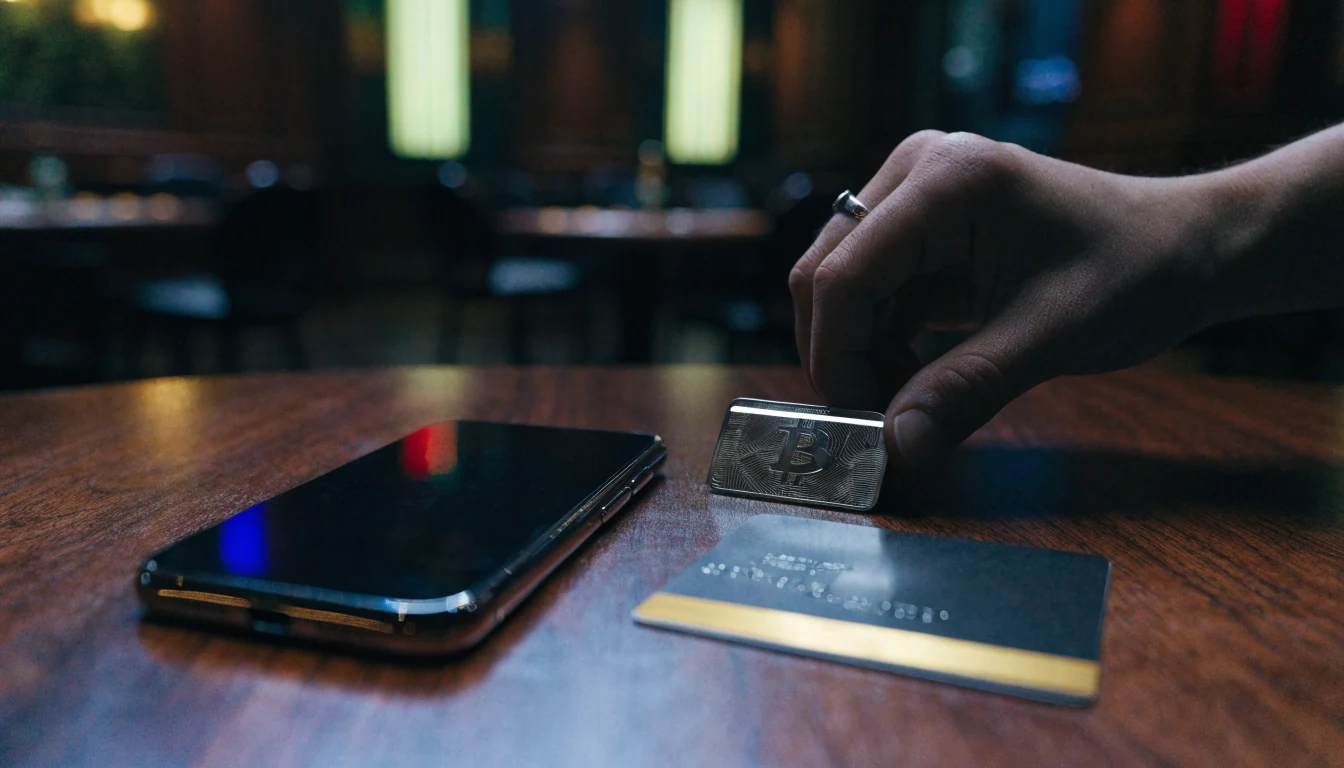
There is also an important legal distinction. Australian law prohibits operators from providing real-money online casino games to people in Australia. Consumer law does not protect players who use offshore casinos. Payment preferences should therefore be understood as general context, not as an endorsement or an indication that casino play is available or protected in Australia.
The clearest conclusion from payment habits is limited: cards, mobile wallets and bank-linked services are familiar parts of Australian commerce, and contactless payments are broadly accepted. Those patterns explain why alternative payment methods attract interest, but they cannot answer whether CashToCode is accepted by any particular casino. Familiarity with a payment type and its actual availability for a specific transaction remain separate matters.
CashToCode Casino Bonuses and Promotion Evidence
A bonus described as connected to CashToCode would involve more than a payment method being mentioned alongside a promotion. The relevant terms would need to specify whether use of that method affects eligibility, which customers qualify, and what conditions govern the offer. Without such terms, no particular CashToCode-related bonus can be treated as established.

That distinction matters because payment availability and promotional eligibility are separate claims. A casino’s cashier information, even if it names a payment method, would not establish that a bonus applies to deposits made with it. Nor would a general welcome offer demonstrate that CashToCode users receive different terms. Promotional claims need to be assessed on their own stated conditions, rather than inferred from a payment reference.
There is also a legal limit on how such offers can be presented in Australia. The Interactive Gambling Act 2001 prohibits operators from providing real-money online casino games to people in Australia, and advertising real-money online casino services to Australian audiences is restricted. Accordingly, promotional material should not be read as an invitation to participate in offshore casino gambling. Australian consumer law does not protect people who use offshore casinos.
This does not establish that a particular offer exists or does not exist; it means that a claim about one requires reliable, current terms that can be examined independently.
What are the deposit and withdrawal limits at the best Amex casinos?
Amex limits are set by each casino and can vary; they are usually higher than limits for Mastercard and Visa. Jackpot City Casino, Spin Palace and Ruby Fortune are among the listed Amex-accepting sites.
Which online casinos accept American Express for deposits?
Jackpot City Casino, Spin Palace, Ruby Fortune, Ignition Casino, Joe Fortune and PlayAmo are listed as supporting Amex deposits for Australian players. Acceptance does not make online casino services lawful to provide to people in Australia.
Are there any fees associated with using American Express at online casinos?
Amex deposits are typically fee-free, but a casino may add a 1.5% surcharge, and Amex cards incur a 3% currency conversion fee. Withdrawal fees may also apply, depending on the casino.
Are there any limits on how much I can deposit or withdraw using American Express?
Yes. Each casino sets its own Amex deposit and withdrawal limits, which can vary; Amex limits are usually higher than those for Mastercard and Visa.
Why does my Amex deposit get declined at some casinos but not others?
Amex may block payments to a particular website, and Australian banks may also block gambling transactions on Amex cards. Some casinos accept Amex while others do not.
Can you use an American Express gift card at an online casino?
Yes, at casinos that accept American Express, but gift cards can be used for deposits only.
Written by the editors at Wildtokyoslotsau.com.