
Choose a pokie by understanding its risks and features
A practical overview of demo play, volatility, published RTP, bonus features and the legal limits on real-money online pokies in Australia.

Table of Contents
Table of Contents
- Online Pokies and Australian Law
- Free Pokie Play and What Demo Results Can Show
- How Pokie Outcomes and Volatility Work
- Pokie RTP: What the Published Figures Mean
- Pokie Machines in Australian Casinos
- Pokie Games, Paytables and Bonus Features
- Real-Money Online Pokies: Legal and Practical Limits
- Pokie Apps and Networked Jackpot Games
- New Pokie Titles and How Game Names Differ
- Choosing a Pokie Machine by Its Features
Online Pokies and Australian Law
The legal distinction in Australia is between the conduct of an online gambling operator and that of a person who uses its service. Under the Interactive Gambling Act 2001, offering real-money online pokie games to people in Australia is an offence for the operator. There is no Australian licence that authorises a business to provide those games to Australian residents. An offshore website may be accessible, but its presence online does not make its real-money pokie service lawful in Australia.
The Act applies to online casino-style gambling services provided to people physically located in the country. Pokies fall within that category, alongside other casino games. The relevant issue is not whether a game is presented as a machine, a website or software: a service offering real-money online pokie play to Australians remains within the law’s prohibition. Descriptions such as “real pokie machine games online” therefore do not indicate a legally available domestic product.
The restriction is directed at operators, not at Australian residents who play. A resident does not commit an offence under the Interactive Gambling Act 2001 merely by playing real-money pokies online with an offshore operator. That distinction does not create an Australian licence for the operator or change the legal status of the service it provides. It is possible for the player not to be committing an offence while the business offering the game is acting unlawfully.
Top operators
Choosing a pokie machine is only part of the decision: the casino you play at also shapes how you deposit and withdraw. This list highlights the known details about each operator to help you consider where to play in Australia in 2026.
-
Kingmaker
- Payout speed
- crypto ~90 minutes, fiat 1-5 days
- Min. deposit
- A$30
Kingmaker lists a minimum deposit of A$30. Its stated payout times are around 90 minutes for crypto and 1–5 days for fiat.
-
Golden Pokies
- License
- Curacao
Golden Pokies is listed with a Curaçao licence. That licensing detail is the available point of reference for this operator.
-
Uptown Pokies
- License
- Curacao (operating since 2017)
- Min. deposit
- A$20
Uptown Pokies has operated since 2017 and is listed with a Curaçao licence. The minimum deposit is A$20.
-
SkyCrown
- License
- Tobique Gaming Commission
- Payout speed
- crypto ~10-15 minutes, fiat 1-5 days
- Min. deposit
- A$30
SkyCrown is listed with a Tobique Gaming Commission licence and a A$30 minimum deposit. Its stated payout times are around 10–15 minutes for crypto and 1–5 days for fiat.
-
Rollero Casino
- License
- Curacao Gaming Control Board OGL/2023/176/0095 (Hollycorn N.V.)
Rollero Casino is listed under Curaçao Gaming Control Board licence OGL/2023/176/0095, held by Hollycorn N.V. This licensing information is the available detail for assessing the operator.
-
LuckyVibe
- License
- Curacao Gaming Control Board OGL/2023/176/0095 (Hollycorn N.V.)
LuckyVibe is listed under Curaçao Gaming Control Board licence OGL/2023/176/0095, held by Hollycorn N.V. The licence is the stated point of reference for this operator.
-
Lucky Dreams
- License
- Curacao
- Min. deposit
- A$20 (POLi)
Lucky Dreams is listed with a Curaçao licence. Its minimum deposit is A$20 when using POLi.
-
Thor Casino
- License
- Curacao – Antillephone N.V. (Versus Odds B.V.)
- Min. deposit
- EUR 20
Thor Casino is listed with a Curaçao licence associated with Antillephone N.V. (Versus Odds B.V.). Its stated minimum deposit is EUR 20.
-
MrPacho
- Payout speed
- crypto 30-120 minutes, fiat 24-72 hours
- Min. deposit
- A$30
MrPacho lists a minimum deposit of A$30. Its stated payout times are 30–120 minutes for crypto and 24–72 hours for fiat.
-
JustCasino
- License
- Curacao Gaming Control Board
JustCasino is listed with a Curaçao Gaming Control Board licence. That licensing detail is the available point of reference for this operator.
The Australian Communications and Media Authority (ACMA) oversees compliance with the federal interactive gambling rules and enforces the Act. Its role includes taking action against services that provide prohibited gambling or advertise it in Australia. ACMA can ask internet service providers in Australia to block websites connected with prohibited interactive gambling services or their advertising. Blocking is an enforcement measure; it does not mean that every offshore site is necessarily inaccessible at every moment.
The scale of enforcement is reflected in the number of websites ACMA says it has blocked. Following enforcement action, the authority has blocked more than 1,455 illegal gambling and affiliate websites since November 2019. This figure covers websites, including affiliate sites, rather than a count of individual players or pokie games. A blocked website may therefore relate to advertising or promotion as well as to the gambling service itself.
Reported totals for illegal services that have withdrawn from the Australian market since enforcement began in 2017 do not match. One figure is more than 210 services; another is more than 190. These figures describe services reported as having withdrawn, not the number of websites blocked, and they are not interchangeable measures of enforcement activity.
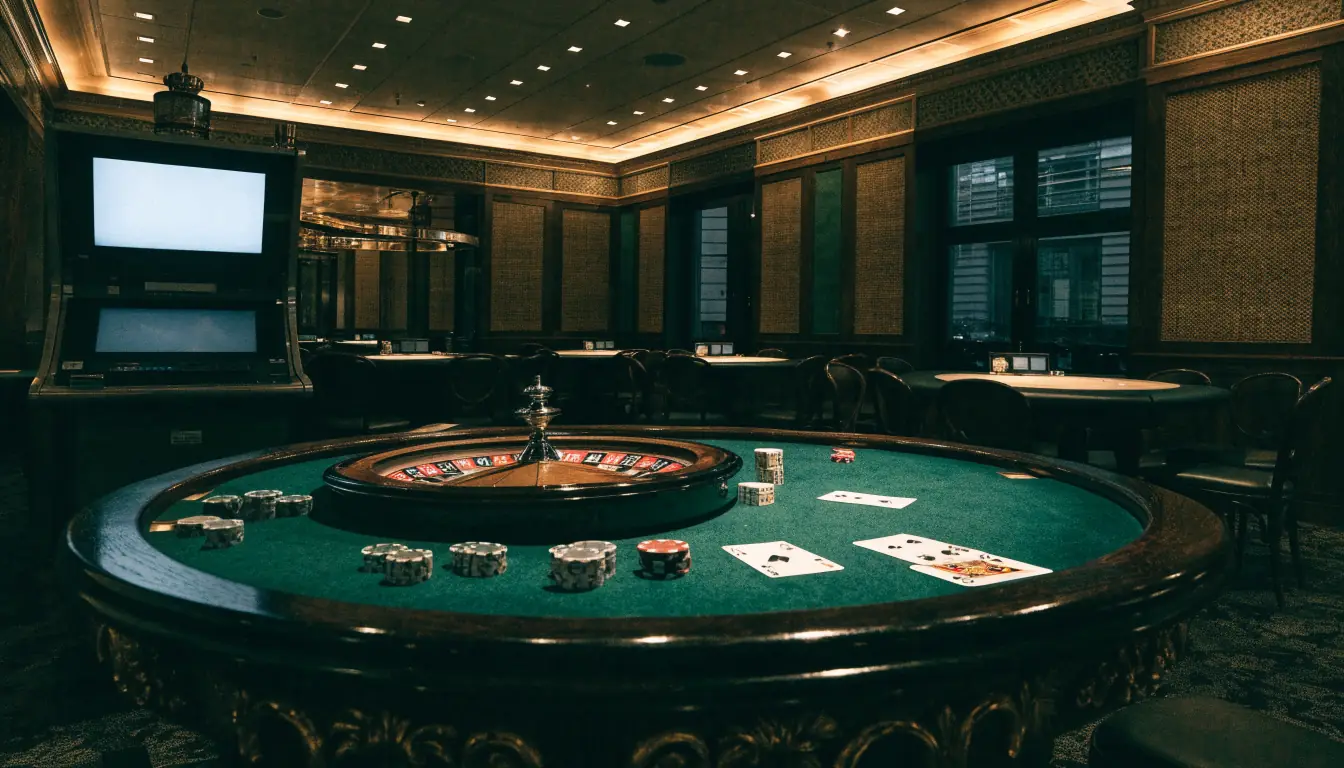
The practical result is a constrained online market for real-money pokies. A website’s offshore location, foreign business status or use of online pokie machine software does not supply the Australian authorisation that does not exist. Nor does a game’s presentation as a simulator or as a familiar pokie format establish that real-money play is permitted. The legal question concerns the service being offered to people in Australia, not simply the name attached to the game or the technology used to deliver it.
This distinction also matters when a website combines gambling content with other material. ACMA’s blocking powers encompass sites providing prohibited interactive gambling services and sites advertising them in Australia. As a result, enforcement can extend beyond the page where a game is played. A page that promotes an online pokie service is not made legally equivalent to a free, non-wagering game merely because it does not itself host a spin. Whether a particular service falls within the Act depends on what it offers and how it operates.
Searches for online pokie machine games can therefore lead to products that are technically playable but not lawfully offered for real-money use to Australian residents. Availability on a device is not the same as legal authorisation. The federal framework places the obligation on operators not to supply prohibited real-money games in Australia, while ACMA’s enforcement includes website blocking and action against services and advertising. These boundaries define the legal position of online pokies; they do not establish that an offshore operator is authorised under Australian law.
Free Pokie Play and What Demo Results Can Show
A free-play version can make a pokie’s basic operation easier to inspect without placing a real-money wager. It may show how the reels move, what symbols appear and how the game responds when a spin is started. This can help distinguish one game’s layout and presentation from another’s, but it does not establish whether the game is suitable for cash play or likely to produce a particular result.
A demo is best understood as a way to become familiar with the interface and rules displayed within the game. Depending on the title, the screen may include a paytable, information about symbols, and controls for setting a stake in the simulated mode. Reading those materials can clarify what the game presents as a win and how its features are described. The demonstration is not a test of a strategy that can reliably secure a win.
The same distinction applies to pokie software. A software demonstration can illustrate how a title is presented on screen, but it does not show that a physical machine is available for purchase, nor does it establish the conditions of a game at a particular venue. Searches about machines for sale can refer to equipment rather than a playable free version. Those are separate matters: a digital demo provides an experience of the game interface, while a machine for sale concerns physical equipment and its ownership or use.
What a demo can and cannot establish
A free session can be useful for learning where game information appears and how the controls behave. It can also reveal whether the visual theme and pace are appealing. These are observations about the version being tested, not evidence about future cash outcomes. A run of wins in free play does not make a win more likely in a later session, and a run without wins does not mean a later session is “due” to pay.

Pokie outcomes are selected by a random number generator. Each spin is a separate event, so a previous result does not determine the next one. That remains important when a demo is used repeatedly: a sequence of simulated results cannot serve as a forecast of another sequence, whether in free play or real-money play. Demo results are not indicative of real-money outcomes.
Nor does a large number of free spins turn the demonstration into a dependable estimate of what a cash session would produce. The results observed are only the outcomes of that particular trial. They cannot guarantee that the same pattern will recur, or that a different mode or setting will behave identically. Treating a short trial as proof of a winning system gives the results more meaning than they can support.
Free play should also be kept distinct from any real-money gambling service. The existence of a no-wager demonstration does not imply that real-money online pokies are legally available to people in Australia. A demo is not a substitute for checking the legal setting of any gambling activity, and it should not be mistaken for an invitation to deposit money.
Using free play cautiously
The most defensible purpose of a demo is limited: to inspect a game’s appearance, controls and displayed rules without risking money. It can support a comparison of themes or interfaces, but it cannot identify a “best” pokie on the basis of a favourable sequence. A strategy built around timing spins, repeating a particular action or responding to previous results has no demonstrated predictive value simply because it seemed to work in a free session.
Do
- Use demos to inspect a game's appearance and controls
- Use demos to clarify the paytable and rules
- Set a firm loss limit before playing
Don't
- Treat demo wins as a forecast of real-money outcomes
- Use a free session to build a winning strategy
- Mistake a no-wager demo for a legal invitation to deposit
Free play also cannot establish how a real-money session would feel financially. If legal land-based play is considered later, a loss limit should be set before play begins and treated as a firm boundary. The absence of a cash stake in a demo removes financial risk from that trial, but it does not make its outcomes a guide to future wins.
How Pokie Outcomes and Volatility Work
A pokie’s volatility describes the pattern of its payouts, not whether it is likely to produce a win on the next spin. Low-volatility games tend to return smaller amounts more frequently. High-volatility games pay less often, but a win can be larger. Neither pattern makes a particular result predictable.
Each spin is independent. The outcome of a previous spin does not change the chances on the next one, so a run of losses does not make a win “due”. Nor does a recent win mean that another is less likely. Past results can form a memorable sequence, but they provide no reliable basis for predicting the next outcome.
This distinction matters when assessing pokie odds. Volatility describes how wins may be distributed over play; it does not, by itself, reveal the probability of a specific result or establish that one game is more likely to win than another. Without comparable information about individual games, volatility alone cannot identify the best pokie machine to play or the best one to win on.
A low-volatility game may suit someone who prefers smaller, more frequent payouts, while a high-volatility game may appeal to someone prepared for less frequent wins in exchange for the possibility of larger ones. These are differences in payout pattern, not guarantees about the experience of an individual session. A low-volatility game can still produce a losing session, and a high-volatility game can produce no large win.

The practical implication is that a game’s volatility should be considered alongside the amount set aside for play and the possibility of losing it. A loss limit set before playing can prevent a session from expanding in response to a losing streak or an anticipated win. No strategy based on previous spins can override their independence.
Pokie sounds and visual effects may make events feel more significant, but they do not change the independence of spins. A celebratory sound is not evidence that future outcomes have become more favourable; likewise, a quiet sequence does not indicate that a payout is approaching. The relevant distinction is the game’s payout pattern, not the sensory presentation.
There is therefore no universal “best” machine on volatility alone. The term identifies a broad characteristic of how often and how substantially a game pays, not a ranking of machines or a promise of results. Individual outcomes can vary widely, and a preference for frequent smaller wins is different from a preference for the possibility of less frequent larger ones. Neither preference makes future spins predictable.
Pokie RTP: What the Published Figures Mean
RTP is a statistical measure of how much of the total amount wagered on a pokie is returned to players when the game is played across a very large number of spins. It describes long-run performance, not the outcome of an individual session. A published RTP therefore cannot guarantee a return, and even a high figure does not ensure short-term wins. Results in a particular session can vary widely.
The displayed figure may also depend on the version in use. Some game providers give operators a choice of RTP settings for the same title, so a figure quoted for a game may not apply to every version. The relevant setting should be checked for the specific pokie being considered; a title name alone does not establish its RTP.
One specialist review reports a 96.5% RTP for Gates of Olympus and 96.48% for Sweet Bonanza. These are figures attributed to that review, not a guarantee about every version of either game or a statement of a universal market setting. The available figures can illustrate how RTP is expressed, but they do not show what an individual player will receive.
As a practical precaution, a loss limit can help keep spending bounded. RTP is useful for understanding a game’s stated long-run return, but it should not be treated as a short-term forecast or as a reason to expect a particular result.
Pokie Machines in Australian Casinos
For land-based play in Perth, Crown Perth is the only legal casino. Western Australia has no legal online casino market, so the machines discussed here are those on the physical casino floor, not online versions presented as local alternatives.
Crown Perth has more than 2,500 gaming machines. That scale means the floor includes a broad selection, but the number of machines does not establish which one offers the best chance of a return. Most machines there operate within an RTP range of 87% to 92%. This describes a broad group, not the payout percentage of every individual machine.

Crown Perth does not publish a machine-by-machine RTP list. As a result, the available range cannot identify the highest-paying pokie on the floor or support a reliable ranking of individual titles. A machine’s appearance, popularity or position in a casino does not resolve that information gap. Nor does a general figure for the floor establish the RTP of a particular machine.
For legal pokies in Western Australia, the machine must display its rules, paylines and prize table. These materials provide a practical starting point for comparing games: they show how a game is structured and what its listed prizes and winning combinations are. They do not, by themselves, show that a particular machine will pay out during a session. The displayed information should be read as game rules, not as a prediction of results.
RTP is a long-run measure: it describes the share of total wagers returned across a very large number of spins. It is not a short-term promise, and a higher RTP does not ensure a win in an individual session. Actual results can vary substantially from the long-run figure. A published range for most of a casino’s machines is therefore not enough to establish the return of a specific casino pokie machine.
This distinction matters when terms such as “best” or “highest paying” are applied to an Australian pokie machine. Without a machine-specific figure, it is not possible to rank Crown Perth’s games by RTP using the casino-wide range alone. The rules, paylines and prize table can help distinguish one game from another, but they do not supply a complete comparison of expected returns across the floor.
A pokie machine simulator may reproduce elements of a game’s interface or rules, but a simulated result does not establish the outcome of play on a casino machine. It should not be treated as evidence that a particular machine will pay out, or as a substitute for the machine’s displayed information. Results in any session remain uncertain.
Before playing, a loss limit can help define the amount set aside for entertainment. RTP should be understood as a long-term average rather than a session-level guarantee, and no machine can be identified as a certain source of winnings from the general figures available for Crown Perth.
Pokie Games, Paytables and Bonus Features
A pokie title is more than its theme and symbols. Its paytable sets out which symbol combinations pay, the value assigned to those combinations and any rules that affect a prize. Two games that look similar can therefore offer different prize structures. The paytable is the relevant reference for a particular game, rather than its title or visual style.
Paylines determine which symbol arrangements count as winning combinations. Some pokies use a fixed number of paylines, while others allow the number to vary. That difference affects how a stake is distributed across the available lines and which combinations can produce a prize. A display with many lines is not, by itself, evidence that a game offers better value: the paytable and the rules for selecting lines need to be read together.

A comparison of pokie machine games can begin with these details: the available paylines, whether they are fixed or variable, and the prizes assigned to each combination. Feature descriptions also matter. They explain how a bonus round is triggered and what can happen within it. Such information describes the game’s design; it does not establish what a particular spin will return.
Some slots include a feature-buy option. Instead of waiting for the bonus to appear through ordinary play, the player can pay an additional premium to trigger it directly. A specialist review has described feature-buy prices as ranging from 50 to 100 times the base bet, with free spins as the bonus feature. That is a report about the titles or settings covered by that review, not a general price rule for every feature-buy game. The specific price and the feature offered depend on the game’s own terms.
Buying access to a bonus changes when the feature is entered, not the information in the paytable or the uncertainty of its outcome. A free-spins round may produce prizes, but access to the round is not a promise of a return. Its rules should be checked alongside the game’s other prize conditions.
Free versions can help identify where a paytable, line settings and bonus rules appear in a game interface. They are useful for learning how a particular pokie is structured, but results in a free version are not indicative of real-money outcomes. The mechanics can be inspected without treating trial results as evidence about later paid play.
The clearest description of a pokie machine game comes from its displayed rules and paytable, not its name alone. These details allow games to be distinguished by their actual prize structures and feature conditions without implying that one title is automatically superior.
Real-Money Online Pokies: Legal and Practical Limits
The legal position distinguishes the operator’s conduct from that of the person playing. Under the Interactive Gambling Act 2001, an offshore operator cannot lawfully provide real-money pokie games to people in Australia. That restriction does not make an Australian resident’s own participation an offence under the Act. These are separate legal questions: the prohibition applies to providing the service, while the player is not criminally liable merely for using it.
This distinction should not be read as approval of offshore gambling or as evidence that a service is safe or protected. Australia has no local licence for real-money online pokies, and an offshore licence does not amount to Australian authorisation. In Victoria, there are no state-issued online casino licences, so players do not have local regulatory recourse through such a licensing system. If an offshore casino withholds winnings, effective legal remedies may not be available. The fact that a site can be accessed does not establish that its operations are lawful in Australia or that a dispute can be resolved locally.
Those matters depend on the operator and the circumstances, and a licence issued elsewhere cannot settle them for an Australian customer. Promotional claims about a “real” pokie experience, an app, or a machine available to buy likewise do not change the legal distinction between an operator and a player.
A physical pokie machine and an online game are not interchangeable for legal purposes. A search for a machine to purchase does not by itself establish that a particular product is available, lawful to own, or suitable for personal use. Nor does the existence of a mobile app show that real-money play is authorised for people in Australia. The relevant question is whether an operator is offering prohibited gambling services to people located in the country, not whether the service is described as an app or a real-machine experience.

Accordingly, the narrow conclusion is that the Act places the prohibition on operators, not on an Australian resident merely for playing offshore. It does not follow that offshore play carries local consumer safeguards, or that winnings can be recovered if a dispute arises.
Pokie Apps and Networked Jackpot Games
A pokie app and a networked jackpot are different things. An app is a way of accessing software on a device; a networked jackpot is a game feature in which linked machines contribute to a shared progressive prize. The presence of a jackpot mechanic does not establish that a game is available through a lawful real-money app in Australia. Under the Interactive Gambling Act 2001, operators cannot provide real-money online pokie games to people in Australia.
Titles such as Lightning Link, Dragon Link and Cash Express illustrate the networked format. These games can be connected across multiple machines or casinos, allowing a progressive jackpot to build across the network rather than being confined to one machine. The prize is therefore associated with the linked game system, not simply with an individual device.
This distinction matters when assessing claims about a “pokie machine jackpot”. A title’s association with a progressive prize does not, by itself, show how the prize is funded, what conditions trigger it, or what amount is currently available. Those details depend on the particular game and its displayed rules. The title alone is not enough to establish the size or likelihood of a prize.
Networked Jackpot Examples
Titles such as Lightning Link, Dragon Link and Cash Express use a networked format where linked machines contribute to a shared progressive prize.
Searches for a pokie machine app may also refer to a game’s name, a software provider, or an app that presents casino-style games. None of those labels proves that real-money play is lawful in Australia. Nor does the presence of an app or a networked game imply that an application programming interface (API) provides public access to a jackpot system. The term “API” describes a technical interface; without details about a specific product, it cannot establish how a game is connected or who can use it.
The phrase “pokie machine cost” is similarly ambiguous. It may refer to the cost of playing, the price of a physical machine, or the value of a jackpot. These are separate matters, and the networked-jackpot feature alone gives no reliable figure for any of them. A machine’s rules and prize information are more informative than its title when identifying how a particular game operates.
Networked jackpots can make a game’s prize structure broader than a standalone machine’s, but they do not make outcomes predictable. A shared progressive prize is a feature of the game, not evidence that a particular player or session is likely to receive it.
New Pokie Titles and How Game Names Differ
A title identifies a pokie, but its name alone does not show how the game is structured or whether it is newly released. Names such as Chilli, Buffalo, Queen of your own Nile, Book of Dead, Immortal Romance and Mega Joker by NetEnt illustrate the range of labels used for individual games. They can help distinguish one title from another, but they are not a reliable guide to the game’s paytable or the number of paylines.

The relevant comparisons are in the game rules. Pokie titles can have different paytables, which set out the prizes associated with winning combinations, and different numbers of paylines. Those lines may be fixed or variable. As a result, two games with quite different names may share some structural characteristics, while similarly named titles should not be assumed to work alike. The displayed rules, rather than the wording of a title, are the basis for identifying those differences.
“New” is also a time-dependent description. A title encountered for the first time may be unfamiliar rather than newly released, and a name by itself does not establish when a game appeared. For that reason, labels such as new pokie or new game are not enough to compare titles. The game’s identifying name and its actual rules answer different questions: the name indicates which game is being discussed; the paytable and paylines describe parts of how it is organised.
A useful way to read a list of pokie names is therefore as an index, not a ranking. Names such as Mega Moolah or Lightning Link can identify games, but the name alone does not establish that one is better than another or disclose its full rules. Comparisons require the rules shown for the particular title. This keeps a familiar or striking name from being mistaken for evidence about the game’s structure, and separates recognition of a title from an assessment of its features.
Choosing a Pokie Machine by Its Features
There is no single feature that makes one pokie machine the best choice for every player. Titles differ in their paytables and in the number and arrangement of their paylines, so comparison is more useful when it starts with the rules displayed for the particular game. A title’s name alone does not establish how it pays or how its play differs from another version.
- Read the paytable for the specific game version
- Identify the number and type of paylines
- Check the RTP for the exact venue or service
- Set a firm loss limit
Read the paytable before comparing games
A paytable sets out the prizes associated with symbol combinations and explains how those combinations are evaluated. Its details can affect what a player needs to see on the reels for a prize to be awarded. Two games with similar-looking themes may therefore have materially different prize structures. The paytable, rather than the artwork or title, is the relevant place to check what combinations count and what prizes they carry.
Paylines are another distinct feature. A game may have a fixed number of lines or variable paylines, and titles can differ in how many lines are available. The rules should clarify which lines are active and how a qualifying combination is formed. A larger number of paylines does not, by itself, show that a game offers better value or a greater chance of a particular result. It describes the game’s structure; the paytable supplies the corresponding prize information.
The displayed rules are useful only when they belong to the exact game version being played. A title can be offered in different configurations, and a familiar name is not enough to establish that its paylines or prizes match those described elsewhere. Comparing the on-screen rules for the specific machine avoids relying on a general description of a title.
Consider the information, not the label
A practical comparison can be made by recording a few game-level details: whether paylines are fixed or variable, how many are provided, which combinations qualify for prizes, and what the paytable awards for them. This makes differences visible without treating a popular title, a particular theme, or a high displayed prize as proof that the machine is preferable.
The word “best” also depends on what is being compared. One player may value a simple layout, while another may prefer a more detailed paytable. Those preferences cannot be resolved by the title’s name. Nor does a prominent top prize describe the full range of outcomes represented in the prize table. The displayed rules offer a basis for comparison, but they do not guarantee a particular result in any session.

RTP is a separate measure from paylines and prize-table design. Where it is available, the RTP for the exact version at the chosen venue or service should be checked rather than assumed from a general title description. A high RTP is not a promise of short-term wins, and individual sessions can vary widely. Before any play, a loss limit should be set and treated as a firm boundary.
What “machine price” can mean
A search for a pokie machine’s price can refer to different things: the cost of buying a physical machine, or the stake required to play one. These are not interchangeable. The game’s rules and displayed stake information can clarify the cost of a spin on a particular machine, but the title alone does not establish a purchase price for equipment. No general price should be inferred from a game name.
For Australian residents, this comparison is relevant to lawful land-based play. The Interactive Gambling Act 2001 prohibits operators from providing real-money online pokie games to people in Australia; offshore status does not make such an offer locally authorised. Victoria has no state-issued online casino licences, and local regulatory recourse is not available for offshore online casino play. Offshore operators may also provide no effective legal recourse if winnings are withheld. These limits matter when a machine description appears on a website: features can be compared as information, but that does not make real-money online play a lawful Australian offering.
A sound feature comparison is therefore narrow: use the rules for the exact game, distinguish paylines from prize information, and avoid treating a title or headline prize as a ranking. These details describe how a pokie is configured; they do not identify a universally best machine.
Can I play pokies for free before betting real money?
Yes. Demo versions let you try a game’s interface and read its displayed rules without placing a real-money wager.
Are online pokies legal for Australian players?
Offering real-money online pokies to people in Australia is an offence for operators under the Interactive Gambling Act 2001, and no Australian licence authorises this service. Australian players do not commit an offence under that Act merely by playing with an offshore operator.
How much money do I need to play pokies?
At Crown Perth, minimum bets typically range from $0.20 to $2.00 per spin, depending on the machine.
Is there a strategy to win at pokies?
No strategy can reliably secure a win: each spin is independent, and past results do not affect the next outcome.
Published by the Wildtokyoslotsau.com team.